Wittgenstein’s philosophy of language and radical metaphilosophical claims
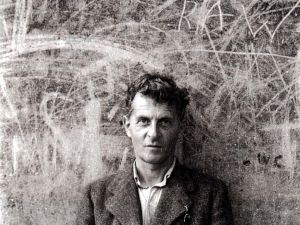
I propose a reading of Wittgenstein’s late philosophy of language which provides support for his metaphilosophical claims. I argue that they follow from his later thoughts on language, namely that philosophical problems arise out of a misunderstanding of language, that there are no theses in philosophy and that philosophy does not provide any knowledge.
Traditional views
Philosophy traditionally conceived of meaning as something exterior to empirical considerations. When Socrates asks “what is virtue?”, it is the concept of virtue which we try to elucidate by listing necessary and sufficient conditions.
Sometimes, as is the case with the Augustinian view, a concept is treated as though it were an object whose label is “virtue”[1]. Some other times, a concept is in the mind, inaccessible to others — this is the idea of a private language[243]. In most cases though, when we ask “what is X?”, we look for a sharply delineated enumeration of necessary and sufficient conditions. And these conditions are thought to be situated in some abstract, “frictionless”[107] space accessible by philosophical inquiry where its meaning is sharp are precise.
Wittgenstein’s claim about meaning — that it is grounded in use — radically departs from these earlier views and has far-reaching impacts. Shedding light on how we acquire an understanding of language, i.e. how we humans acquire meaning, will allow us to understand how debates in philosophy about the meaning of a term operate. In order to ask what the meaning of “truth” is, for example, it is illuminating to examine how meaning is acquired at all.
Problems with ostensive teaching: indeterminate reference
When teaching a child his first language, explanation of words by means of other words is pointless. Wittgenstein states that in this case, meaning is acquired by “ostensive teaching” — a particular case of use involving pointing [6].
Where it seems to do fine for uniquely referring names, when we teach concepts which are asserted of multiple objects, we quickly run into problems. For instance, if I teach the word “three” by pointing at a group of three balls, how is the child to understand that I am not naming the grouping of balls by the utterance “three” as opposed to teaching him the quantity “three”?[28] When I point at a blue vase and I say “blue”, how is the child to understand that I am describing a color as opposed to a shape, or a name for the object, or a feeling I have when looking at it, etc.[33]?
We can sum up the language-learning problems Wittgenstein mentions by saying that they suffer from indeterminate reference – that is, indeterminate from the point of view of the learner. If usage is indeterminate, how then could it be the foundation for meaning? How can meaning be conveyed through usage, when usage is ambiguous?
An answer to the previous question is not clearly stated, but I believe that Wittgenstein leaves it open as these questions are empirical and must be left to science. In fact, linguistics and psychology have been interested in the phenomenon for quite some time, and recent literature on early language acquisition deals specifically with indeterminate reference. Meaning is acquired, for concepts such as “three” or “blue”, by cross-situational mechanisms. And this solves the problem of indeterminate reference.
When an act of pointing occurs directed at a blue vase, the word “blue” might refer to a whole set of things (color, shape, composition, name, size,…). But when, on a second instance, pointing is directed at a blue curtain and the word “blue” is uttered again to the child, he understands that “blue” does not refer to shape nor size, because they are now different but the same word is used to describe the object.
Contemporary language acquisition linguists supply even more detailed models. They include probability distributions over possible references, and one after the other these possible references are eliminated as the word is used in more and more cases. After a word has been used in a sufficient amount of contexts, only one possible meaning remains – and such is the process which lead most of us to understand the meaning of the word “vase”, or “blue”.
Linguists use computer models to predict the rate of acquisition of the words and this is tested against data[4]. It is also a noteworthy fact that the acquisition of the meaning of a word is decided by the child’s proper use of the word.
Perhaps these ideas were unknown to Wittgenstein, but they are not necessary to establish his theory of meaning — even though they somewhat provide support to his views. These considerations do not affect his theory of meaning: I will independently establish how the meaning of words can be acquired – either by use or by definition, there is no other way! – and show that only the former can shed light on meaning.
Definitions as equivalencies
A definition is a sentence seeking to make a word intelligible to a person who does not know it, but who is sufficiently acquainted with the language to understand the words used in the definition. When we ask about the meaning of a word, why don’t we then just refer to the definition from which we learned the word?Possible worries are that necessary and sufficient conditions are sometimes not stated[88], that there are many incompatible ones[66], or that they are not consensual [77].
The strongest argument is that of the infinite regress resulting from definitions as the basis of meaning. If a word is to be defined in terms of a conjunction of others, than its meaning is expressed by other words, whose meanings in turn are expressed by other words. In order for the words not to be empty, they cannot do this eternally or circularly [29]. In a sense, then, definitions do not inject meaning: they simply state blurred equivalencies of the form “X is equivalent in meaning to something like Y and Z”. Because of the way in which we acquire language — either by usage or by definition — and because of the powerlessness of definitions to inject meaning, meaning must be grounded in use[5].
Consequences for conceptual debates
In this section I establish the status of conceptual debates of the form “what is X?”. We will gradually attain stronger and stronger results until we reach the metaphilosophical statements we seek to attain.
“What is X?” questions ask what the meaning of X is. We are thus looking for a semantically equivalent but clearer[6] formulation of the concept “X”. Usually, philosophers seek a set of necessary and sufficient conditions for falling under X which satisfy both the semantic and clarity criteria.
As a result of the previous section, we must naturally turn to the use of the concept: for instance, let’s take the concept “game”. Hockey is a game, throwing a ball against a wall in a particular way is a game, chess is a game, karaoke is a game, and so on. This step is simply the listing some of the use of the concept, which is a subset of its extension.
Then, we try to formulate necessary and sufficient conditions. But Wittgenstein enigmatically says: “Don’t say: “They must have something in common, or they would not be called ‘games’ ” but look and see whether there is anything common at all. […] don’t think, but look!“[66] In effect, no sharp boundaries have been drawn; when something starts to be a game or ceases to be one is indeterminate[106 – great passage].
What this means is that if we surveyed a group of people and asked them whether some limiting case was a game, say spinning a pencil around one’s finger, then their answers would diverge. These inconsistencies in the usage of a word renders the listing of necessary and sufficient conditions impossible, for it must agree with usage (this is where meaning is rooted), but usage itself disagrees!
A real-world example: some people consider poker to be a sport. Some others do not. If we try to find a set of necessary and sufficient conditions for being a sport, how are we going to decide whether poker will satisfy our conditions? The only argument we have for our conditions is its use, so its contradictory use renders the conceptual debate insoluble[76-77]. The same holds, according to Wittgenstein, for ethics and aesthetics.
The concept of “game” or “sport” remains vague because we find no utility in drawing sharp boundaries. In legal texts, though, where vague boundaries could result in irresolvable litigation, sharp boundaries are drawn in the beginning in the “definitions” section[7]. Two important things are to note from this analogy: (1) the boundaries are set because they are useful, and (2) they are set arbitrarily, but constrained by some usage. What I mean in (2) is that defining violence as “physical force exerted onto some other person against his will” is acceptable even though its somewhat arbitrary and clashes with some use of the word (namely psychological violence), while defining violence as “the number of planets” is inacceptable, because no one uses the word in that way.
It follows from what we have established that when we debate over necessary and sufficient conditions for concept “X”, we are attempting to draw sharp boundaries out of the usage of the word. If the usage of the word is consistent throughout the “form of life”[23] which uses it, then if we figure out a set of necessary and sufficient conditions, no one will disagree about it since it exactly picks out all the use of the concept which is all there is to its meaning. On the other hand, if there are inconsistencies in usage, no sharp boundaries can be drawn.
The opponents thus engage in philosophical debate without realizing that no solution is possible, since philosophers do not alter the ordinary use of a concept which is the root of its meaning — they leave everything as it is. A miscomprehension of language has caused the philosophical debate, which now seeks to create a new concept[8] which confusedly uses the same word as the vague concept it seeks but fails to clarify. Even then, philosophers disagree about value: “the new concept should be drawn in this way, not in that way!”
An extension to the whole of philosophy
Philosophy is full of questions other than “what is X” questions. To my knowledge, Wittgenstein does not clearly argue for what I am about to say, but this is in my view a fair interpretation of sections 109, 116 and 133 (and perhaps 119 and 122).
Some philosophical questions seem unassailable by linguistic arguments. They seem to be about the world and how it actually is: are humans free? Is our universe real? Is there life after death? Is causality provable? Suppose such questions are, after all, empirical matters. Then they would be part of science, not philosophy. Now suppose that they are not empirical. Then they are about logical relations between concepts, since they are not mathematical. These relations have been formalised in logical systems, and no one disagrees about them. The validity of particular relations, though, also depends on the concepts’ intensions — we are trying to establish analytic truths which follow from a formulation of necessary and sufficient conditions[9].
But the precise articulation of these intensions on which the answer depends cannot be drawn out of usage, because concepts like “exists” and “independent” are used inconsistently. Even if the logical relations were extremely simple, as in “is psychology a science?”, such a question is impaired by the lack of sharp boundaries of its components. Philosophy thus has no theses: if it did, they would be resolved as quickly as a proof in FOL because philosophical statements are a priori if we, like Wittgenstein, classify as scientific all empirical questions. It is therapeutical in the sense that it seeks to point out to pseudo-debates arising from a miscomprehension of meaning and its links with use. Finally, philosophy does not change language: it does not impact usage of ordinary language and thus leaves everything as it is[124].
“The more narrowly we examine actual language, the sharper becomes the conflict between it and our requirement. (For the crystalline purity of logic was, of course, not a result of investigation: it was a requirement.) The conflict becomes intolerable; the requirement is now in danger of becoming empty.—We have got on to slippery ice where there is no friction and so in a certain sense the conditions are ideal, but also, just because of that, we are unable to walk. We want to walk: so we need friction. Back to the rough ground!” [107]
Notes
[3] This is consistent with his rejection of the necessity of necessary and sufficient conditions corresponding to a concept.
[4] Fazly, A., Alishahi, A. and Stevenson, S. (2010), A Probabilistic Computational Model of Cross-Situational Word Learning. Cognitive Science, 34: 1017–1063. doi: 10.1111/j.1551-6709.2010.01104.x
[5] I am now only stating how the word “meaning” is most generally used, since of course its usage is somewhat inconsistent, and in some limiting case it might turn out that the statement is false. This is inevitable, precisely if Wittgenstein is right, so we need not worry about that. Nothing can be done to attain a crystal clear account of meaning, because its usage is not crystal clear. This will be more obvious later in the paper. [43]
[6] For an explanation E of concept P to improve clarity, the set of objects whose membership in the extension of P is indeterminate must be reduced as a result of E.
[7] By defining concepts which don’t agree fully with use is indeed to create a new concept, even though it is labeled by the same word as the one used in ordinary language. See next note for an elaboration. This is important because definitions do not supply meaning: legal texts create new concepts, they don’t explain the ones we use inconsistently: only a description of use can do the job.
[8] The concept is indeed a new one. E.g.: Good = an action which maximises expected pleasure. This cannot mean the same thing as the concept “good” which we usually use: this is the Moorean naturalistic fallacy argument. Thus, if I define Good in this fashion, I am actually defining a new concept, Good2, otherwise I am being incoherent with the usage of the word, but this is impossible because usage determines meaning. Because philosophers miscomprehend language, they think that they are in fact debating about Good1, and that they can know the real concept Good1 by appeal to arguments exterior from usage (otherwise they would realize that they hit a wall). In this sense, philosophical problems arise when language goes on holiday.
[9] E.g.: “Are salmons mammals?” is falsified by the definition of a salmon, which specifies that it is a fish, and that in the definition of fish, the animal must lay eggs, and in the definition of mammal, the animal cannot. Thus, if something is a salmon, it is not a mammal. This is obtained by logical relations from necessary and sufficient conditions which happen to be sharp enough in this simple case, perhaps because there are scientific conventions drawing sharply the necessary and sufficient conditions — evidently something which philosophy lacks (e.g. truth or science).
 Thought Failures